The Brief
Automotive-AI is a tech company based in Berlin, aiming to support safer and faster development of highly automated driving. It provides a product suite about the simulation testing platform, in order to test the control algorithm of automotive vehicles.
Joined as an early member of the company, I took the mission to shape AAI's products from scratch, in collaboration with product managers and engineers. As a full-stack designer, I have helped to bring several modules to life.
Simulation Testing
The Goal
In the automotive driving vehicle, the algorithm of the processor is the brain. It's essential to test and improve the algorithm. The goal of the project is to provide a simulation testing platform which helps to train and improve the algorithms, for both our clients (Audi, Continental) and our own algorithm team.

Clients & AAI
Understand the Technology
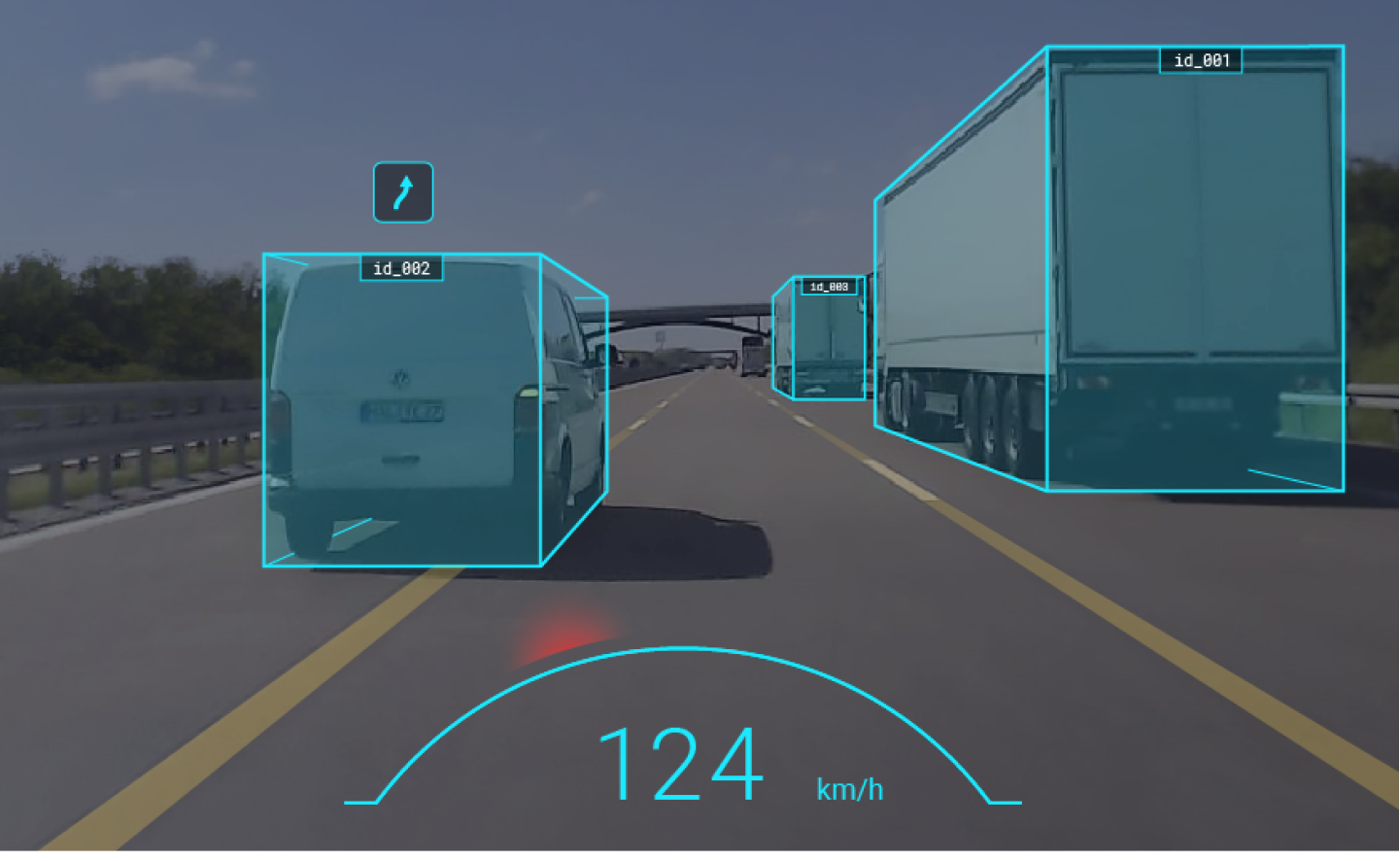
It’s essential to understand the key technology behind. In the automotive driving vehicle, the algorithm of the processor is the brain. One core process to train the algorithm is through simulation testing. Comparing to road test in the real world, simulation testing is much safer and faster.
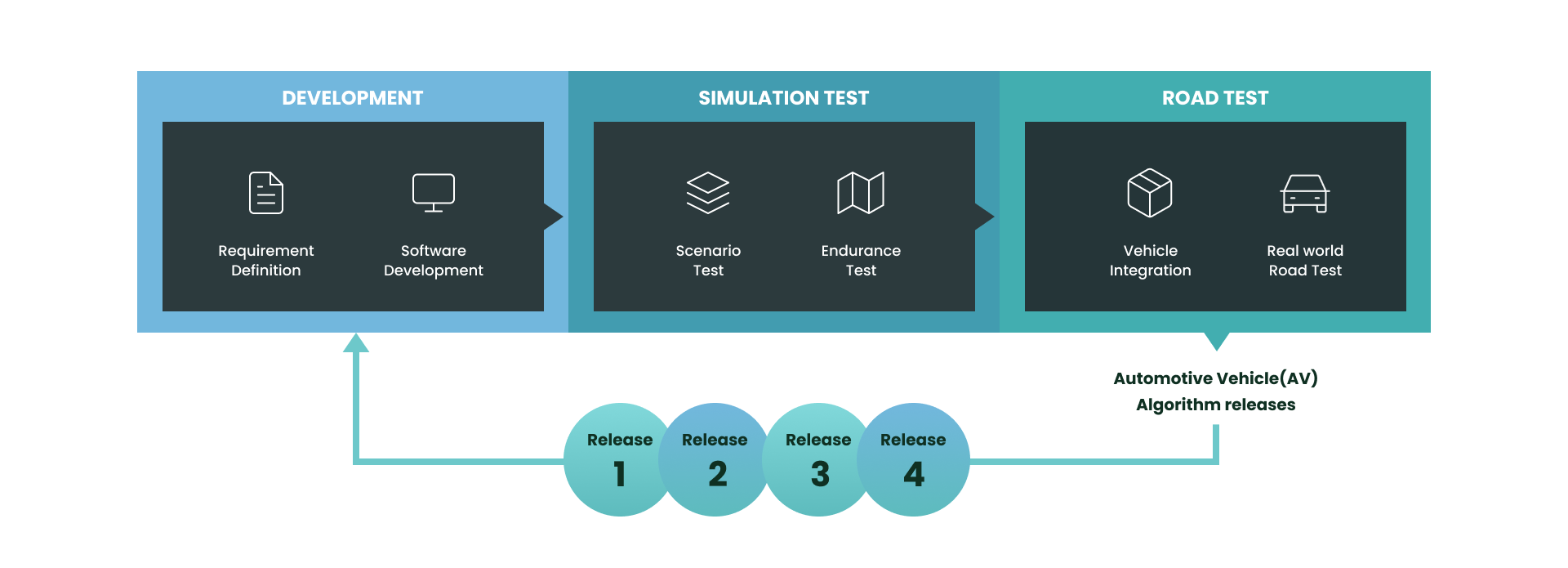
Understand Stakeholders
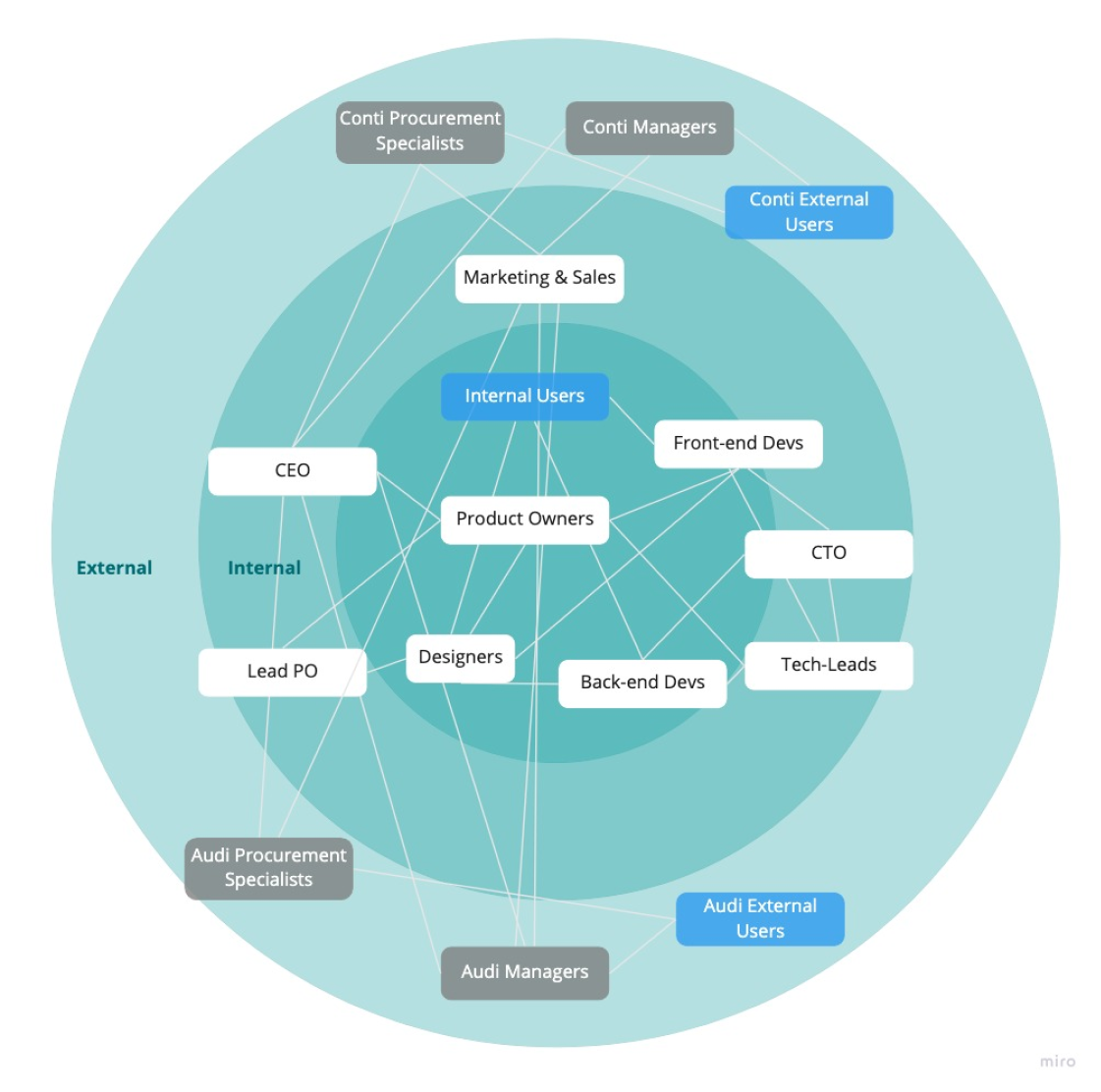
UX designers serve as a bridge with different stakeholders to shape the common understanding of the products.
Stakeholder Map
Understand the Users
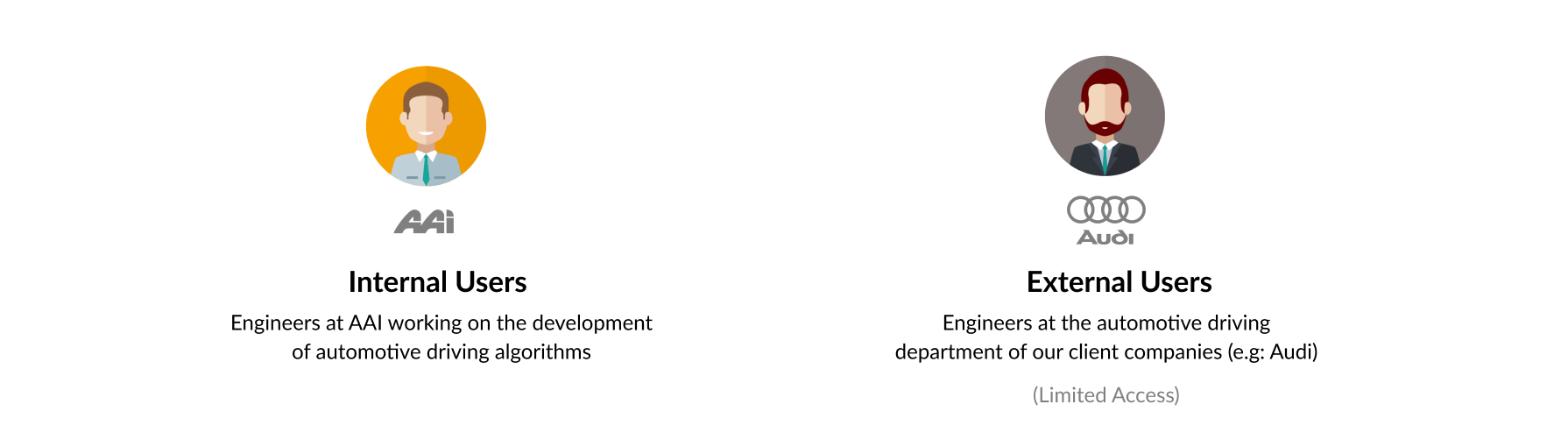
The users include both internal users and external users. Internal users are engineers at AAI, while external users are the engineers from our client companies. Actually we have limited access to our external end users in the development phase. That's why we spent most of the time conducted user research with internal users.
Research
Competitor Research
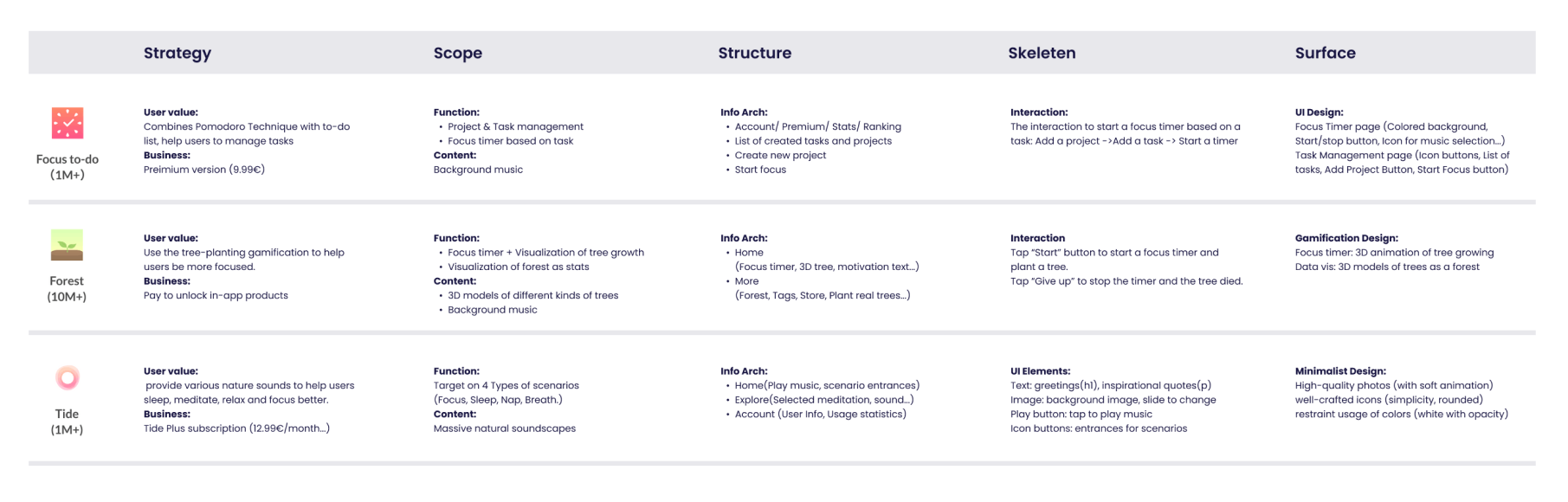
Selecting the three top competitors in the App Store, I analyzed them from 5 elements of user experience. To learn from both the strengths and weaknesses of these Apps.
Apps like Focus-to-do and Tide requires extra steps to start a Focus Timer, making it not easy to use. App like Forests using words that sounds too strict and demanding, it’s more like treating children rather than professionals.
Interviews
It took us around 2 month to build the MVP of Foca, then we continually improved it in later releases.
User Journey
We created the user journey based on the analysis the user needs. The user flow contains three main parts, test management dashboard, test configuration and test replay.
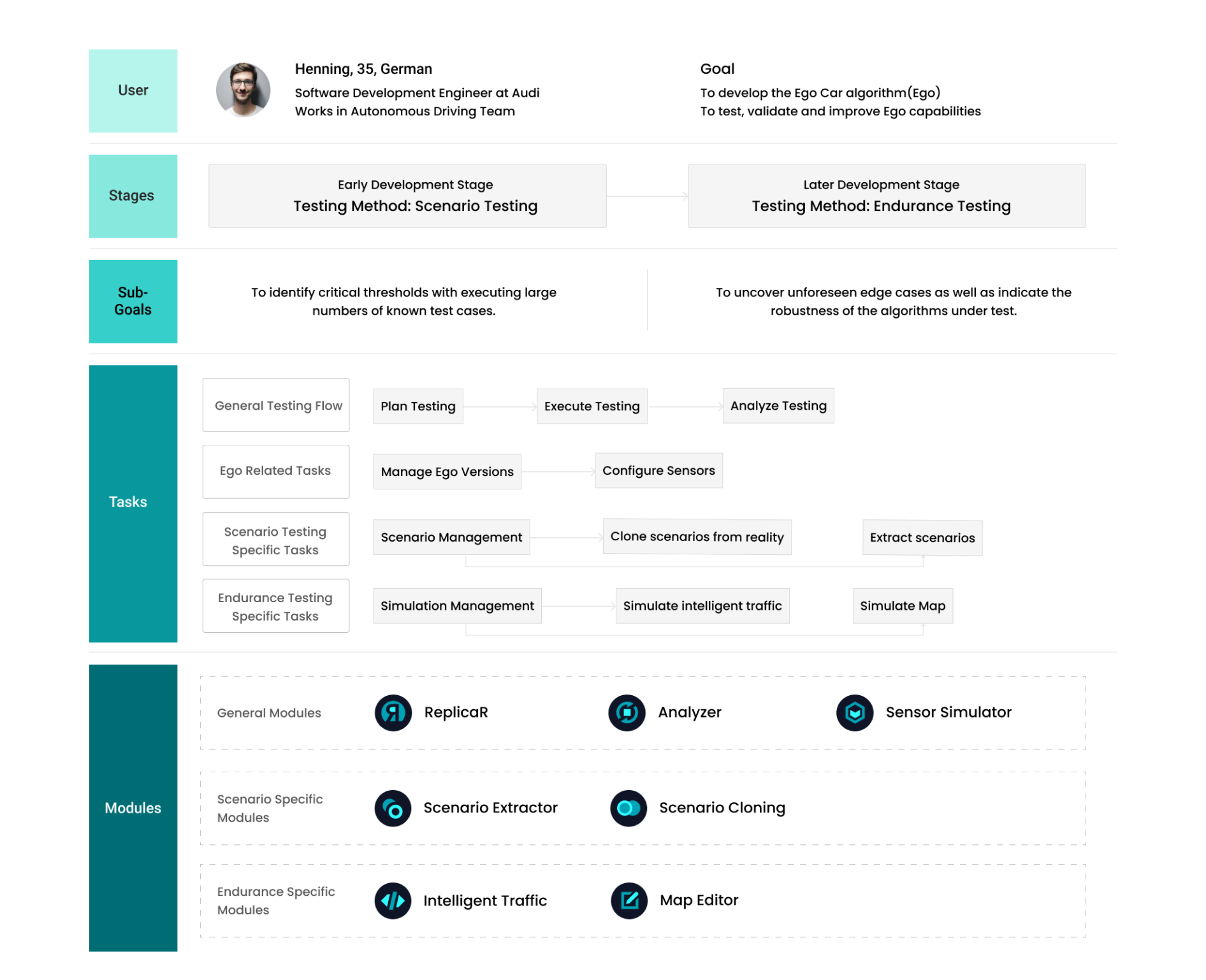
User Journey and AAI Product Suite
Module1: Analyzer
Analyzer is the light 3D platform to replay a test. I collaborated with the 3D and front-end developers, to define the interactions in the product.
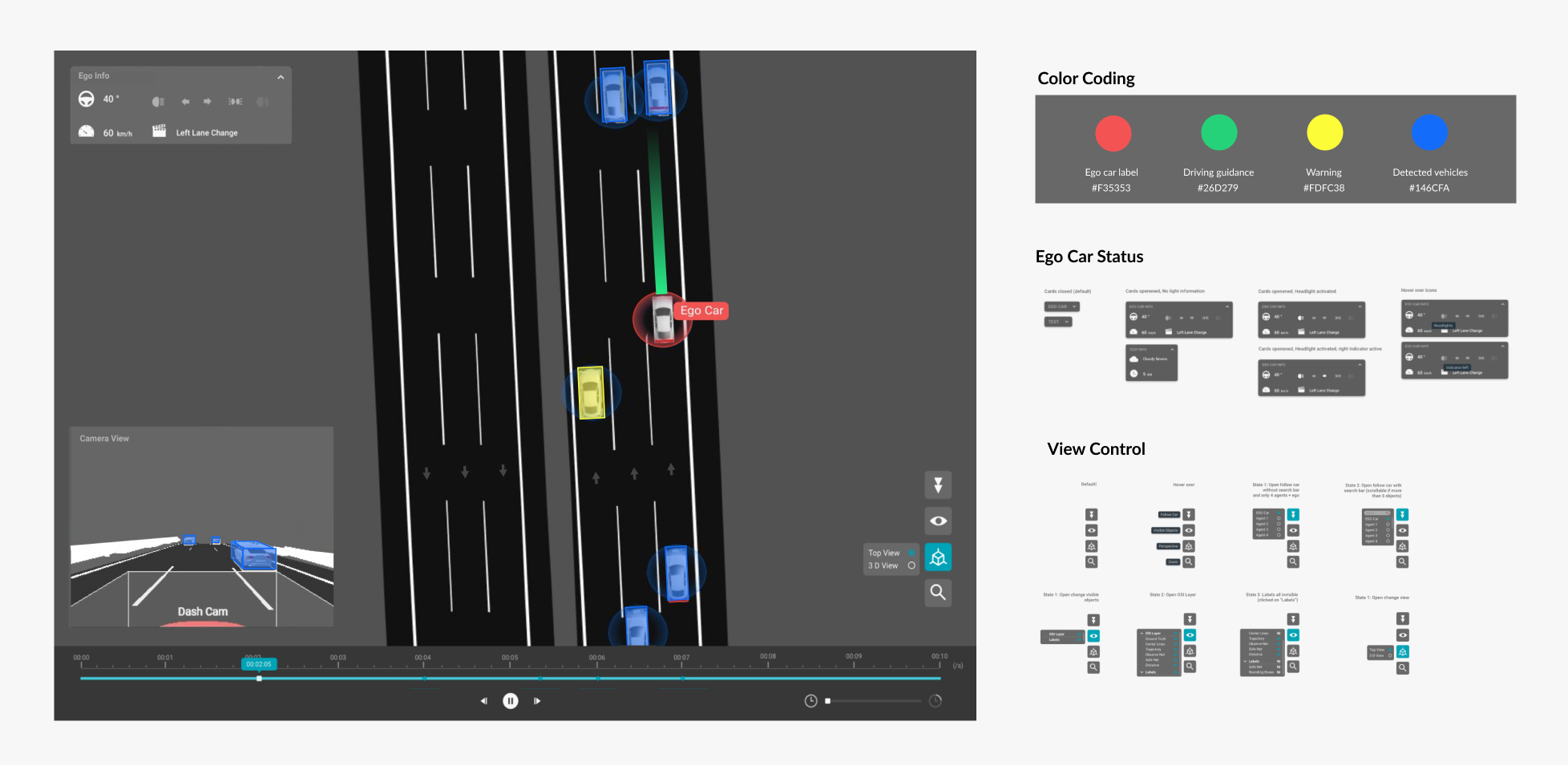
Test Replay UI Design
Module 2: ReplicaR
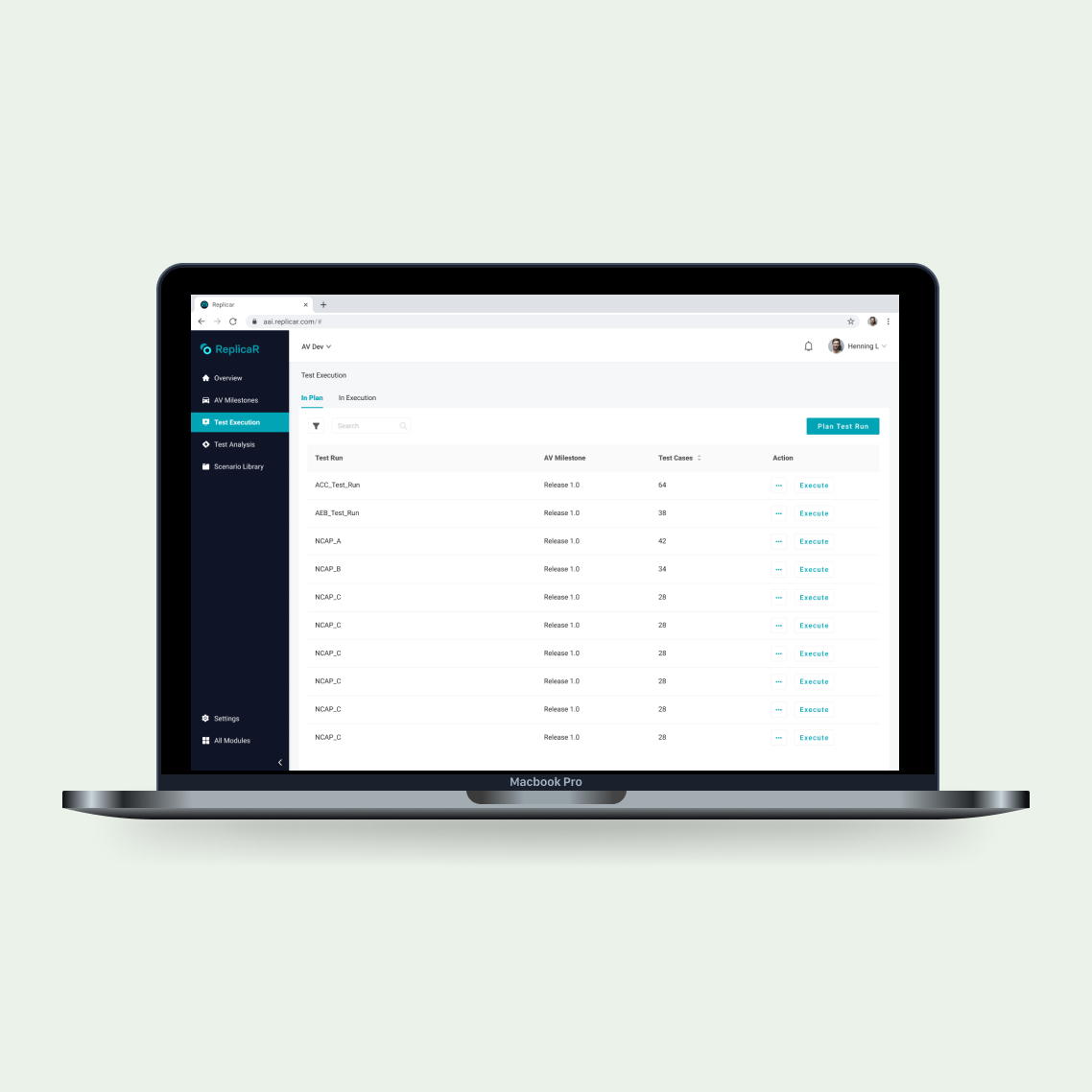
ReplicaR is the dashboard for simulation test managements. Users can configure and analyze tests in the platform.
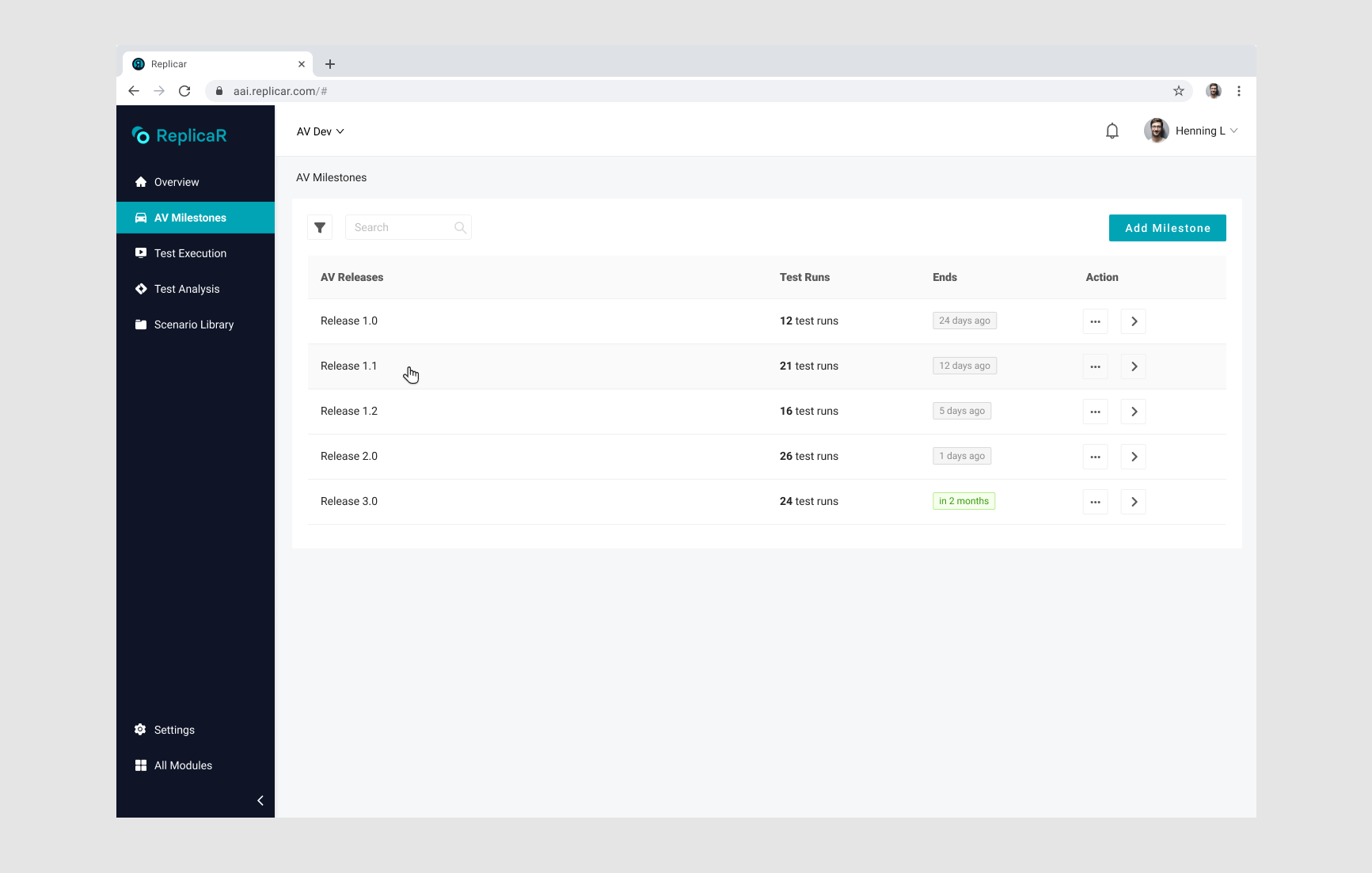
AV(Autonomous Vehicle) Milestone UI
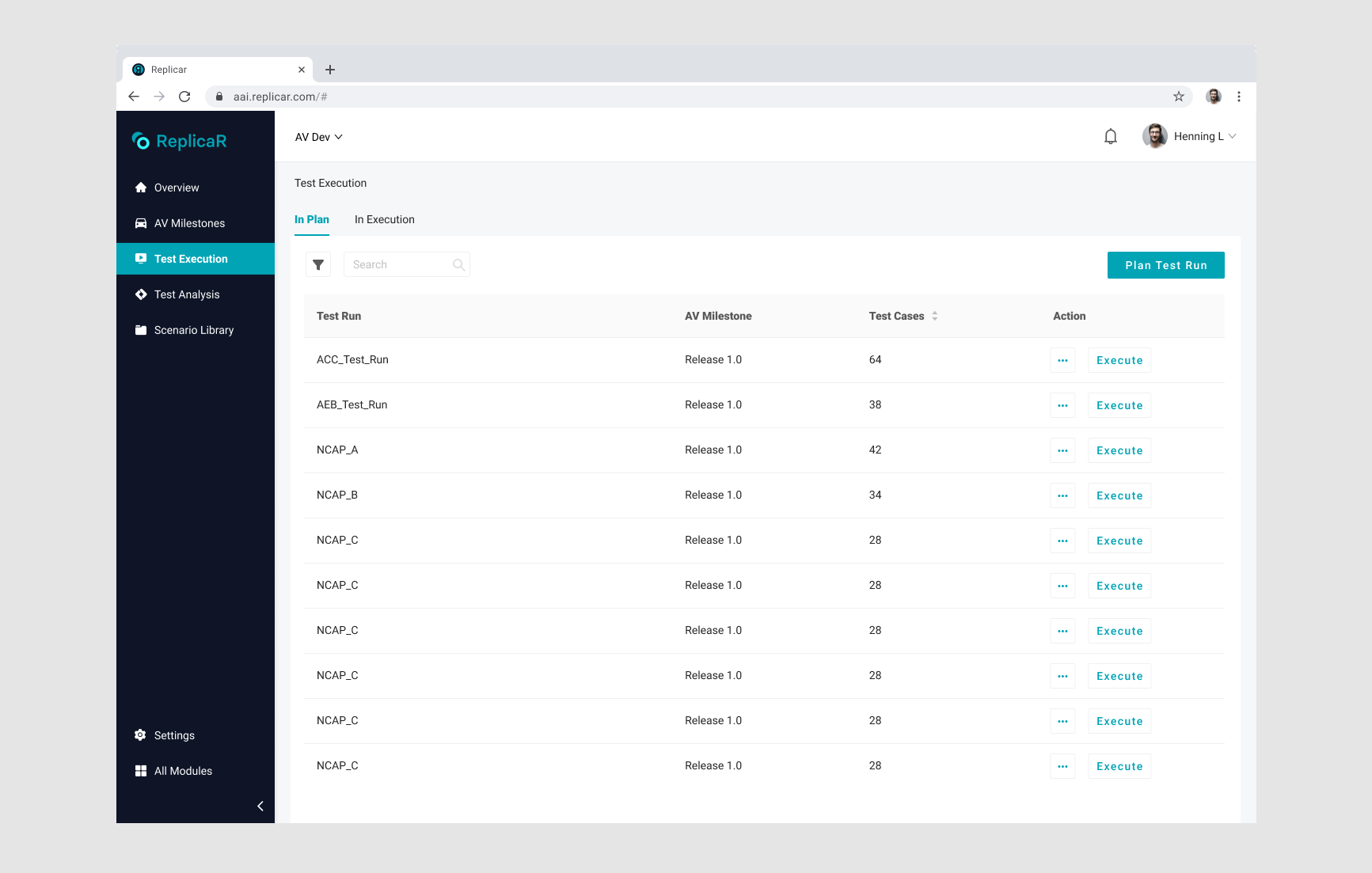
Test Execution UI
Module3: Scenario Extractor
Scenario Extractor aims to extract scenarios from the real world to simulation.
Observation
I observed the users to finish their daily tasks. It showed that it required many manual work and very time-consuming, this lowers the efficiency of these engineers.
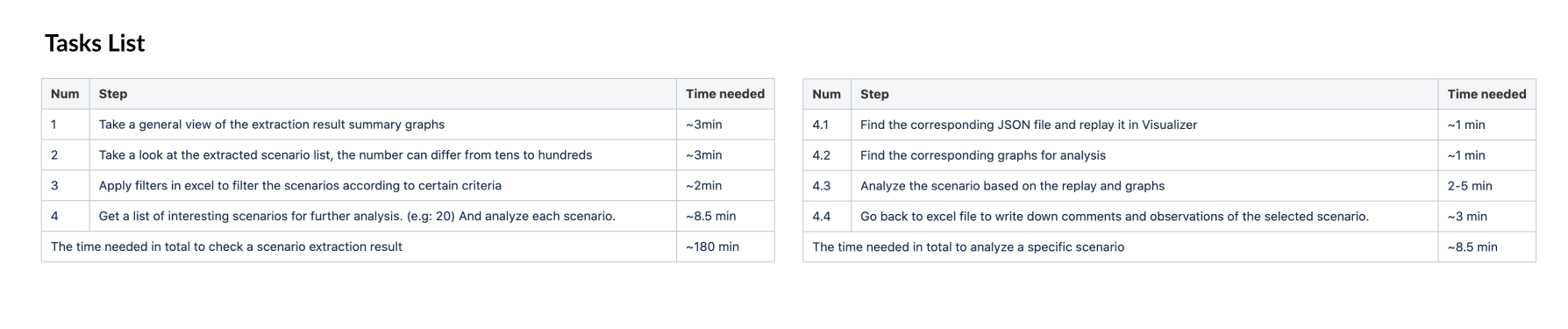
User Needs
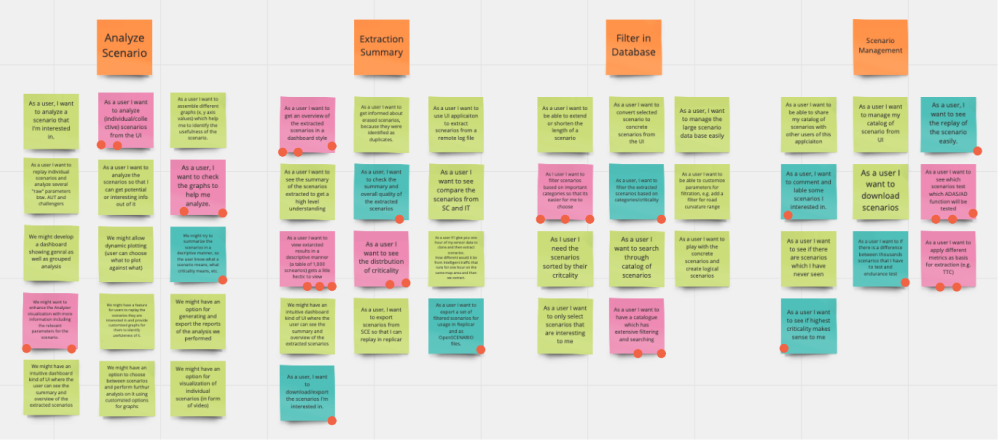
Besides observation, I also organized a workshop with internal users to understand better about their needs.
User Flow
Summarizing the user flow based on the observations and workshop previously.
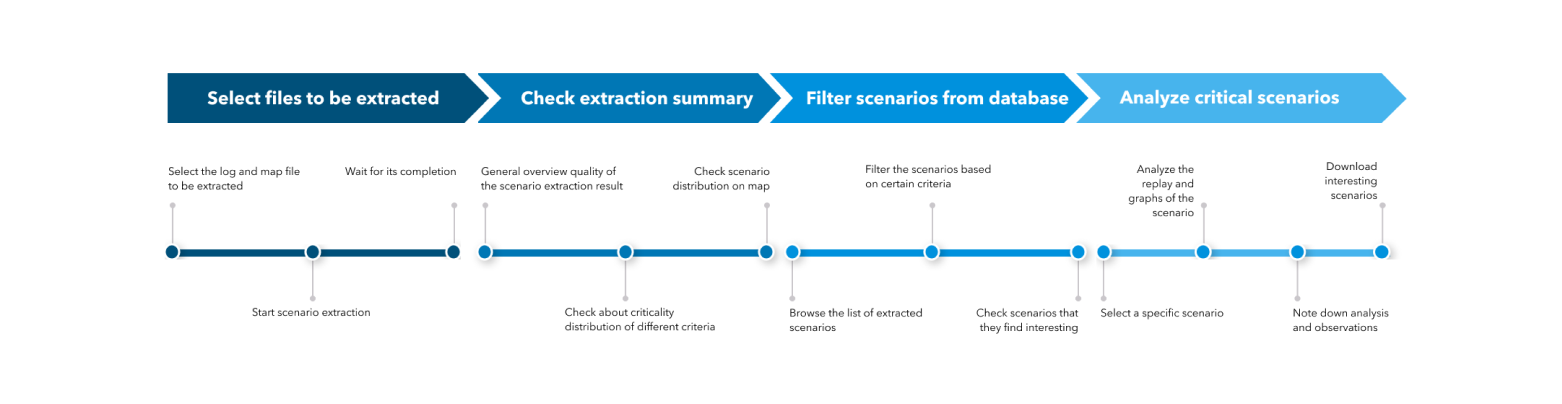
Task Analysis
Design Exploration
I explored different layout designs. Then I evaluate the concepts based on different aspects to make a final decision.
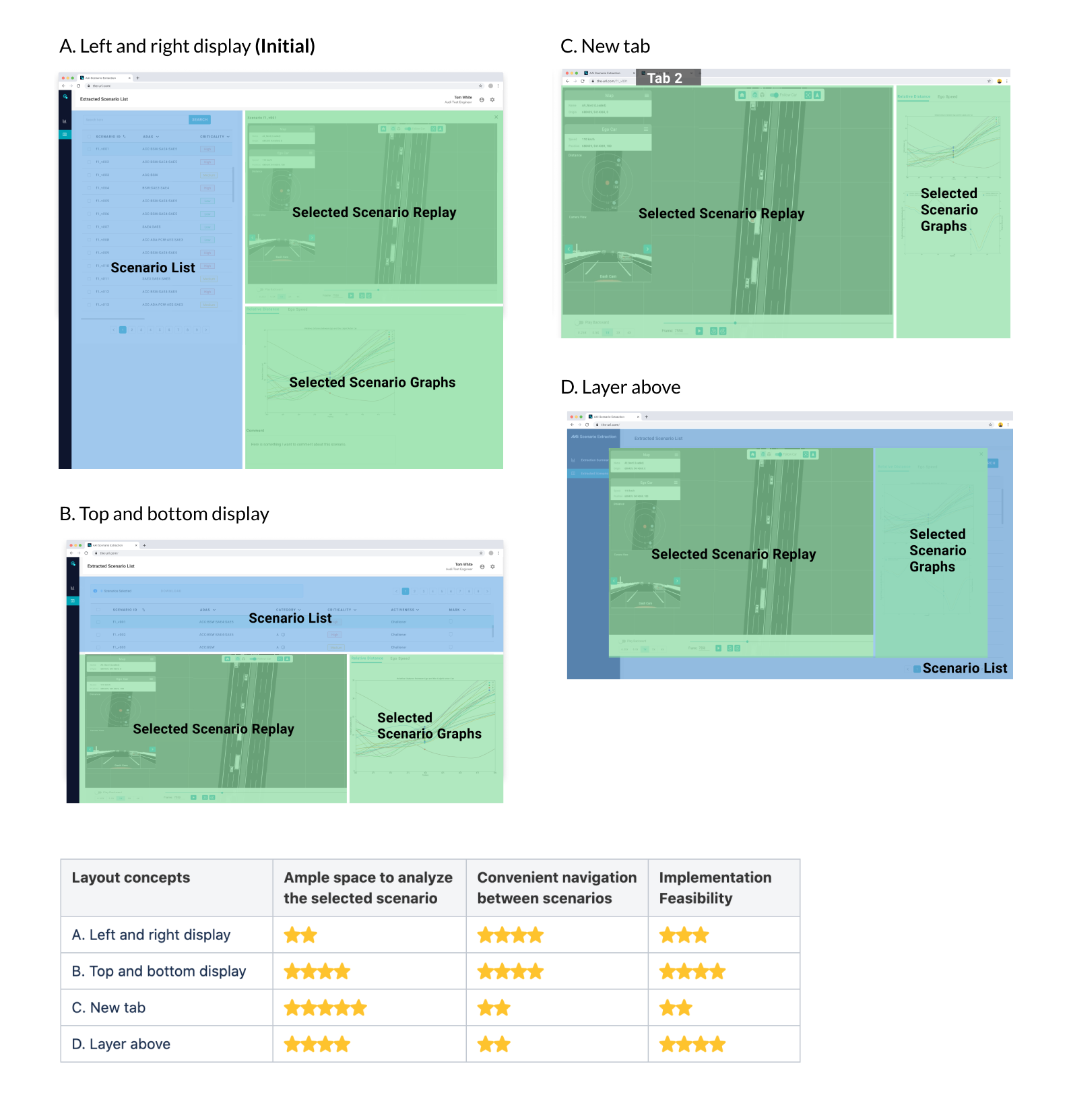
Layout Exploration (Plan B Selected)
UI Design
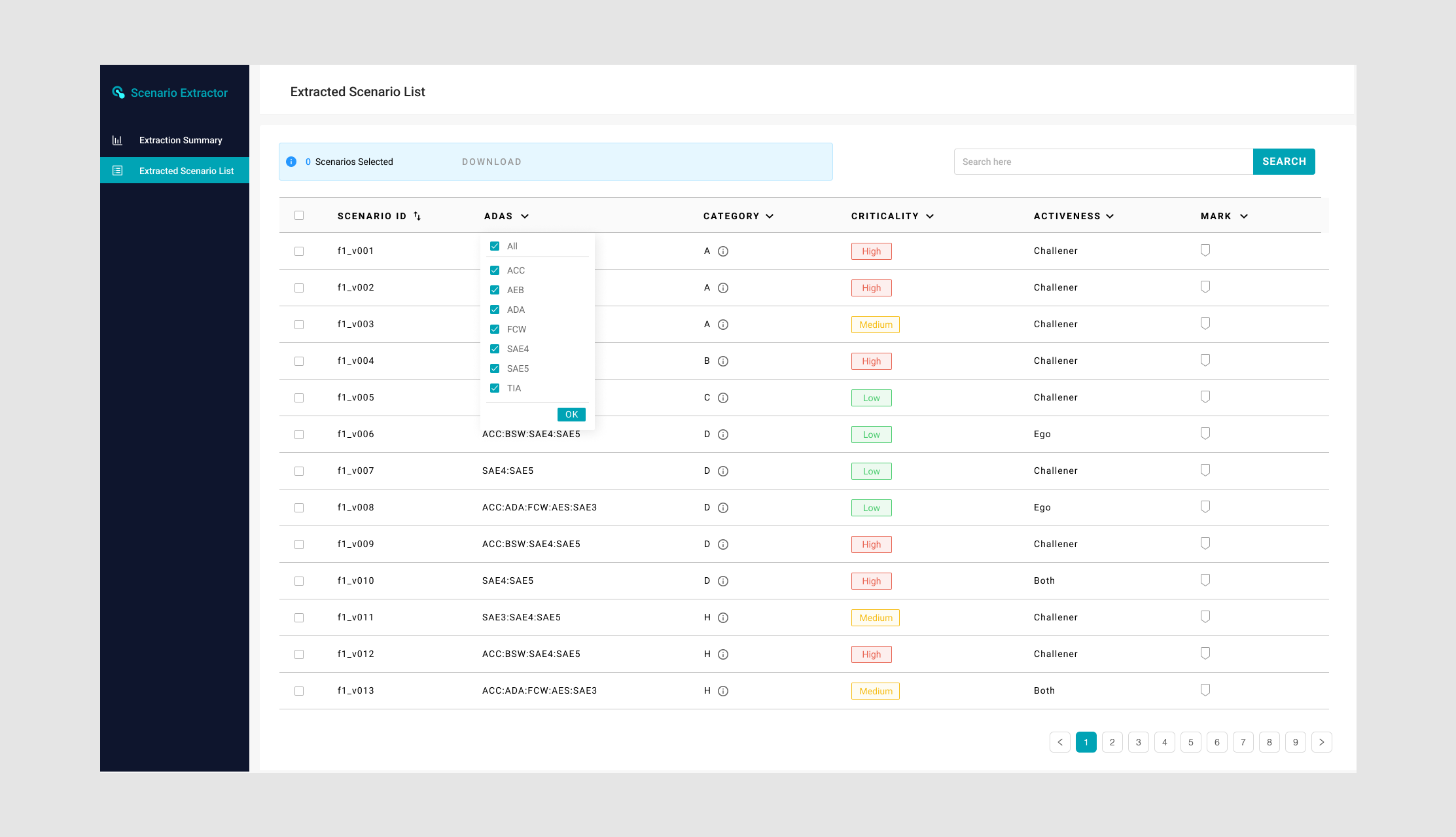
The UI of the module includes data visualization and data table managements.
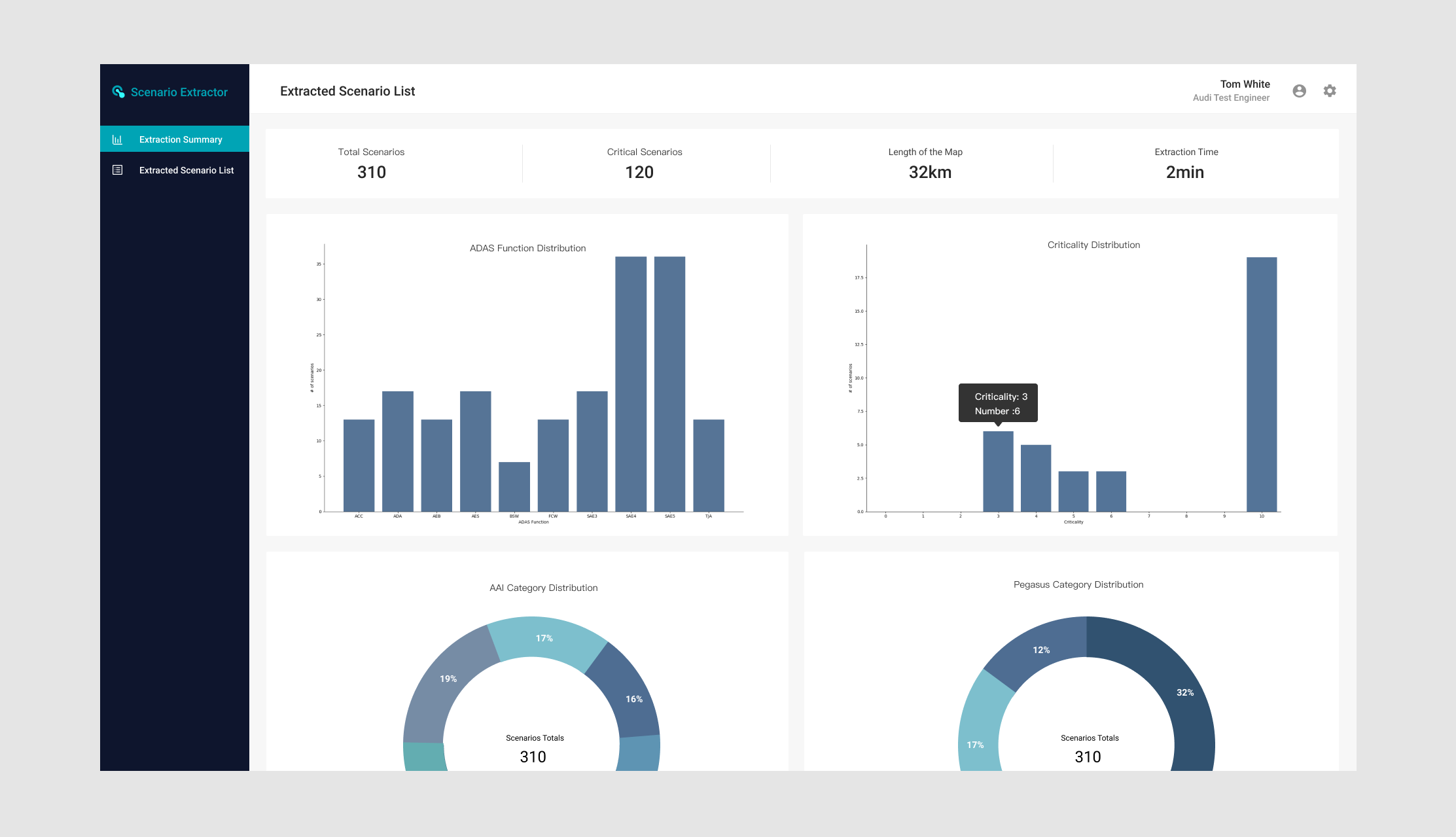
Outcome
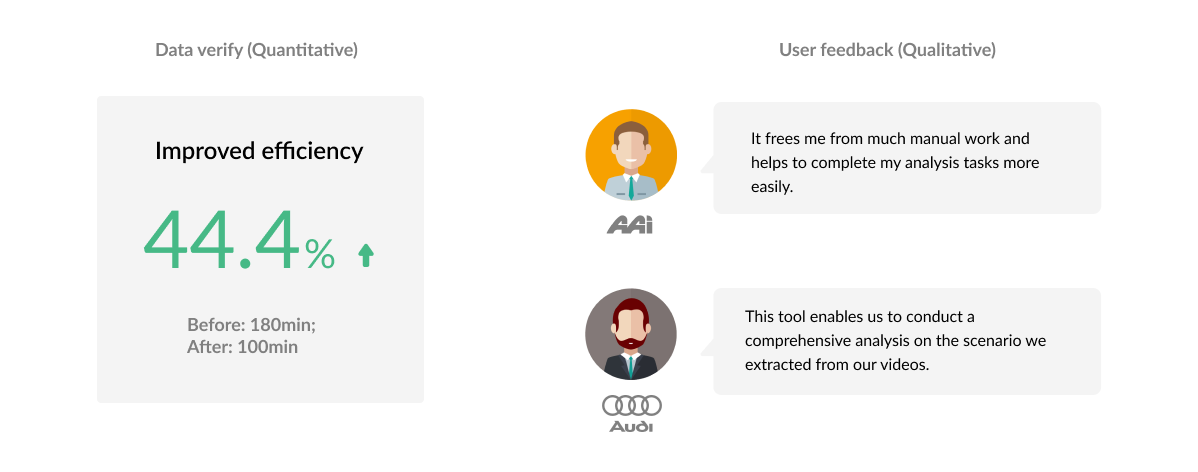
Quantitative: Improved efficiency.
Qualitative: Improved user satisfaction.
Thoughts
Embrace Uncertainties
The industry of autonomous driving is futuristic and has many uncertainties. Moreover, the startup environment increases this uncertainty.
Stakeholders / Customers / Users
When access to end users is limited, there are other ways to understand the needs. We can still make our own assumptions to design and develop the products.
Understand Priorities
It’s important to understand what’s the first priority in each phase of product development. In order to leverage the design focus and efforts.